Prokaryotic and eukaryotic cells
A bacterium and one of your nerve cells look nothing alike, yet the structure and behavior of both depend on the same four factors:
- matter: the atoms and molecules it’s built from
- energy: needed to build those molecules and do the cell’s work
- organization: each part sits in a specific place, often because proteins bind to one another like snap-together building blocks (protein-protein interactions)
- information: the cell’s genome, its complete set of genetic material (DNA), whose genes hold the instructions for making proteins
Living things fall into two groups by how their cells are built.
Prokaryotes: no nucleus
A prokaryote is an organism whose cells lack a nucleus, a membrane-enclosed compartment for the DNA. The name means “before a kernel,” a nod to the kernel-like nucleus other cells have.
Prokaryotes come in two groups, bacteria and archaea, and both are usually 1–10 µm across. Bacteria live nearly everywhere, including in your gut; most are harmless, and a few cause disease. Archaea are less common and often live in extreme places such as hot springs and deep-sea vents.
Inside, a bacterial cell has only a few visible features:
- The plasma membrane, a double layer of phospholipids with embedded proteins, is the barrier between the cell and its surroundings.
- The cytoplasm is everything inside the plasma membrane.
- The nucleoid is the region where the DNA sits. It is not enclosed by a membrane.
- Ribosomes are the machines that make polypeptides, the chains of amino acids that fold into proteins.
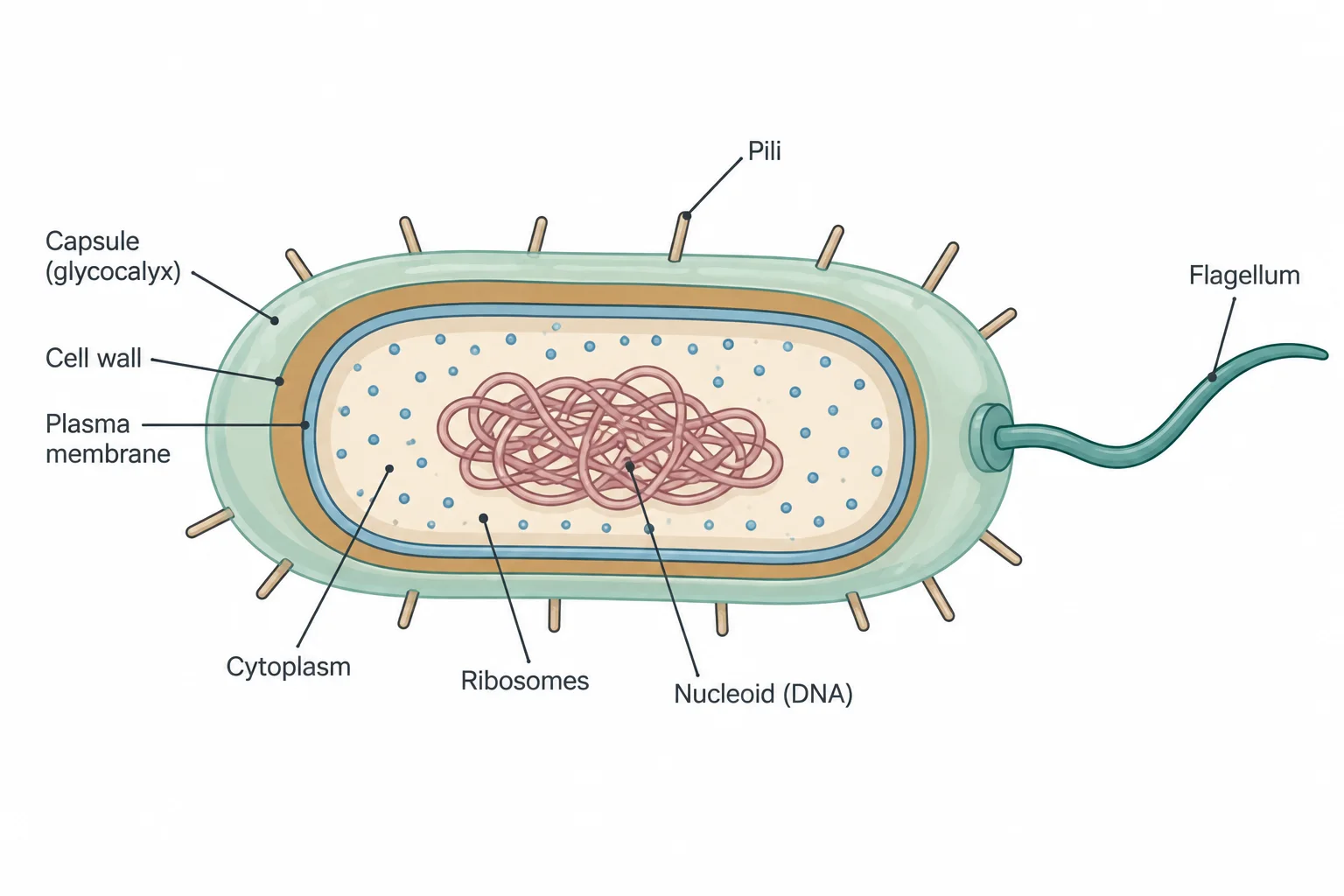
Several structures sit outside the plasma membrane:
| Structure | What it does |
|---|---|
| Cell wall | A fairly rigid, porous layer (often made of peptides and carbohydrates) that supports and protects the cell; nearly all bacteria and archaea have one |
| Glycocalyx | A sticky outer coating that traps water and keeps the cell from drying out |
| Capsule | An extra-thick, jelly-like glycocalyx made by some disease-causing bacteria; helps them escape the host’s immune (defense) system or stick to cells |
| Pili | Short appendages that attach the cell to surfaces and to other cells |
| Flagella | Long appendages that let the cell swim (the ability to move is called motility) |
Eukaryotes: a cell with rooms
Every organism that isn’t a bacterium or archaeon is a eukaryote (“true nucleus”): protists (such as paramecia and algae), fungi (such as yeasts and molds), plants, and animals. Eukaryotic cells keep most of their DNA inside a nucleus.
The nucleus is one example of an organelle, a compartment inside a cell, usually wrapped in one or more membranes, with its own structure and job. Eukaryotic cells are full of membrane-bound organelles that divide them into separate regions. This compartmentalization lets different chemical reactions run in different places at once.
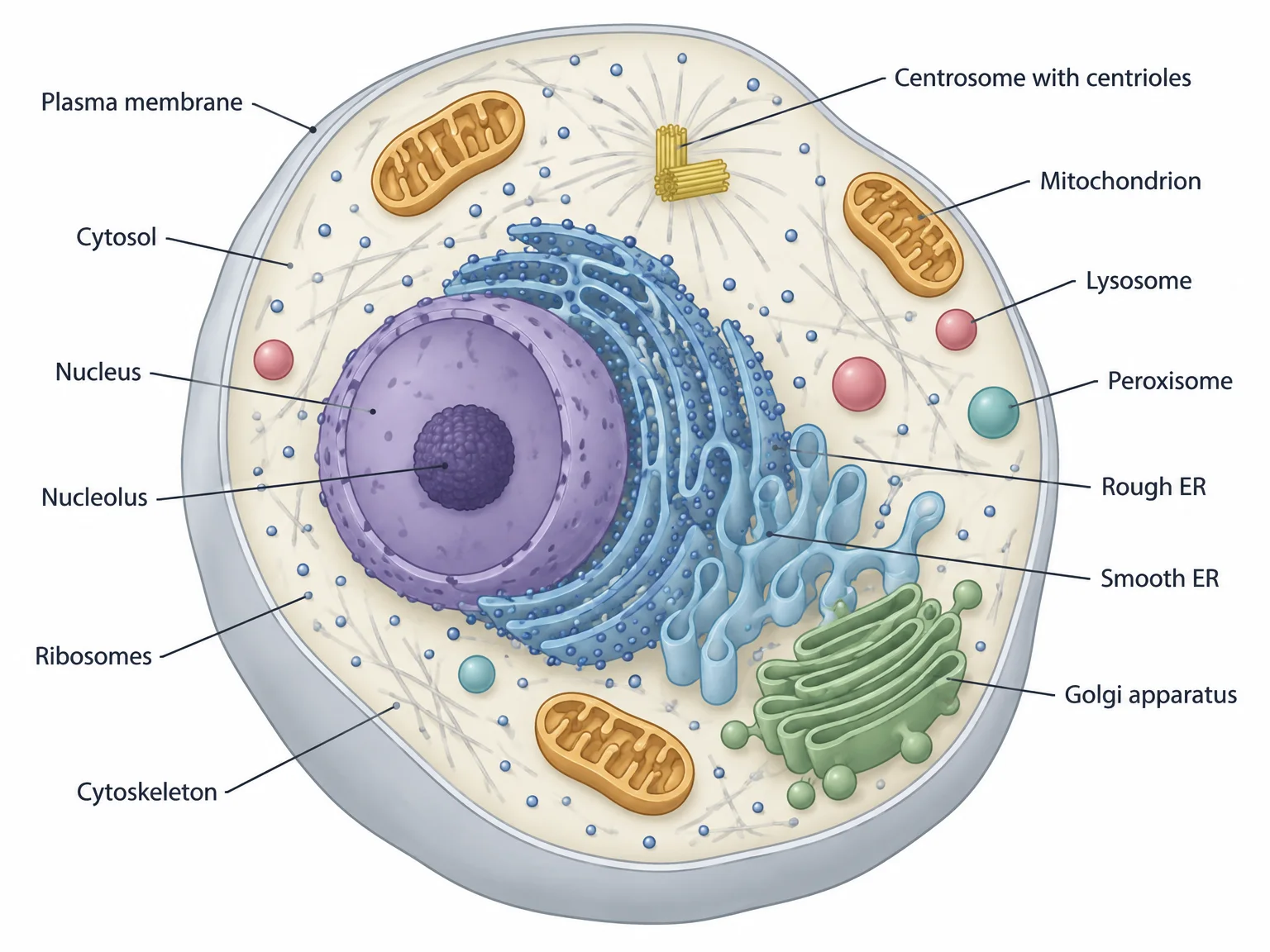
Different cell types in one organism share the same organelles but can look very different. A human skin cell is roughly round, while a neuron (nerve cell) has long, branching extensions.
What plant cells add
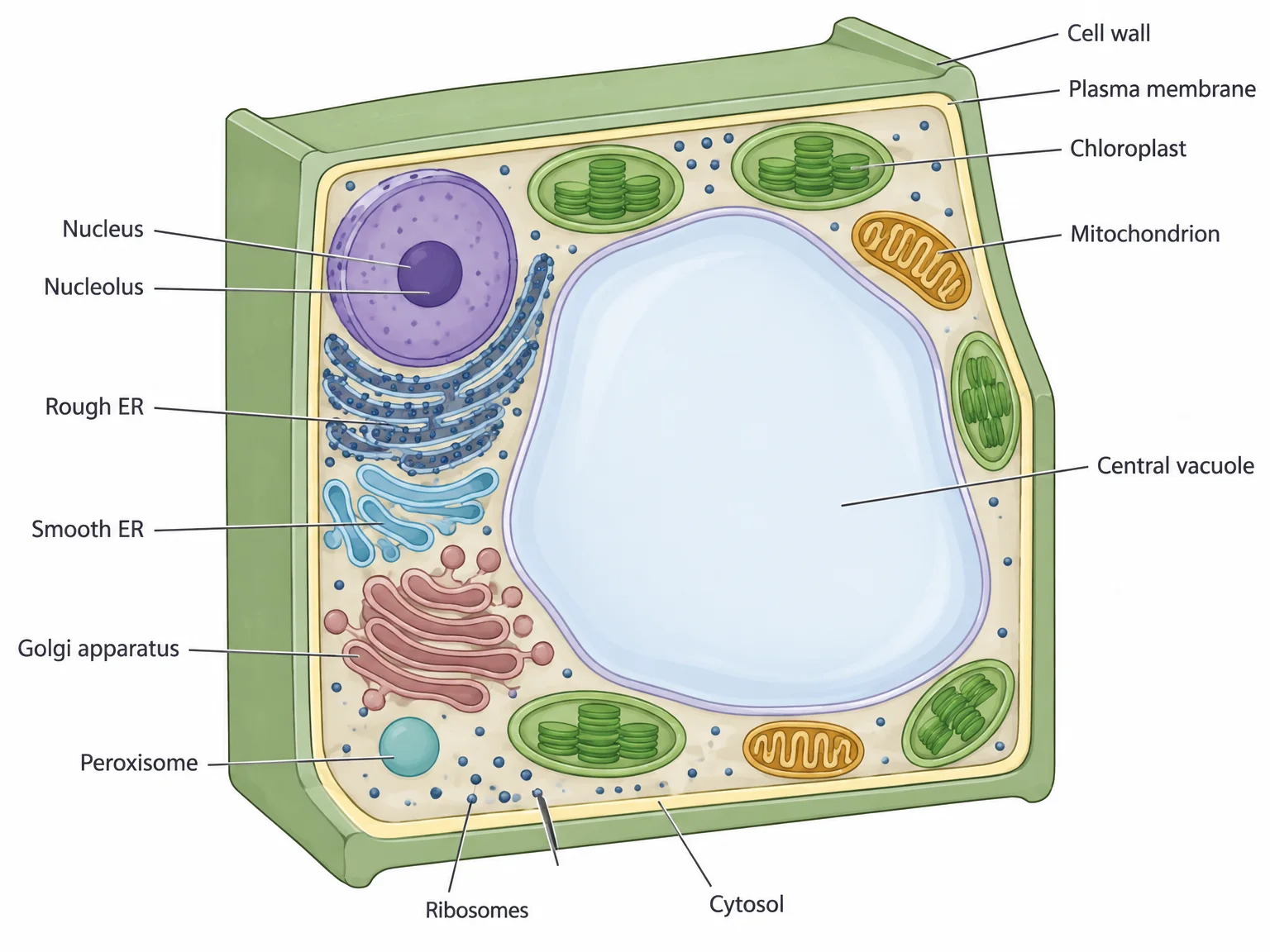
Plant cells contain most of the same organelles as animal cells, plus three extras:
- Chloroplasts, which capture light energy and make sugars by photosynthesis
- a large central vacuole, a fluid-filled sac that stores materials and regulates the cell’s volume
- a cell wall outside the plasma membrane, which gives the cell its shape
Plant cells also lack two things animal cells have: lysosomes (digestive organelles) and centrioles (a pair of structures in the region where an animal cell’s internal fibers are anchored).
Bacterial, animal, and plant cells compared
The table below uses three organelles covered later: the endomembrane system (a network of connected internal membranes that makes, modifies, and ships molecules), mitochondria (which convert energy from food into a form the cell can use), and chloroplasts.
| Feature | Bacteria | Animal cells | Plant cells |
|---|---|---|---|
| Cell wall | Present | Absent | Present (different chemical makeup from bacterial walls) |
| Flagella or cilia | Flagella sometimes | On certain cell types | Rarely |
| Plasma membrane and ribosomes | Present | Present | Present |
| Cytoplasm | Usually one compartment | Organelles surrounded by fluid | Organelles surrounded by fluid |
| DNA | Usually one circular chromosome (a single loop of DNA) in a nucleoid | Several linear chromosomes in a nucleus with a double membrane | Same as animal cells |
| Endomembrane system | Absent | Present | Present |
| Mitochondria | Absent | Present | Present |
| Chloroplasts | Absent | Absent | Present |
Mitochondria and chloroplasts also carry their own small chromosomes, a clue to their bacterial origin.
Check yourselfName the structures found in plant cells but not animal cells, and what each does.
Chloroplasts carry out photosynthesis, the central vacuole stores materials and regulates cell volume, and the cell wall gives the cell its shape. (Going the other way, animal cells have lysosomes and centrioles, which plant cells lack.)
Practice questions
1 of 2
Which structure is found in bacterial, animal, and plant cells alike?
2 of 2
Which two groups of organisms are made of prokaryotic cells?